
Travel back in time and discover the story of La Vialette, a Caussenarde farmhouse dating from the 14th century.
Nestled on the Causse de Sauveterre, at the gateway to the Gorges du Tarn and the Aubrac plateau , La Vialette is far more than a place to stay in the Lozère : it is a place of memory. Here, every stone tells a story, and everyone who passes through leaves a trace.
For nearly seven centuries, this ancient Causse farmhouse has kept transforming without ever losing its soul, passing through generations, trades and seasons, from the Resistance to the welcome it offers travellers today.
Let us tell you this story, year by year : the story of a family, of a land, and of the art of hospitality in Occitania.
The 14th Century · Where our story begins
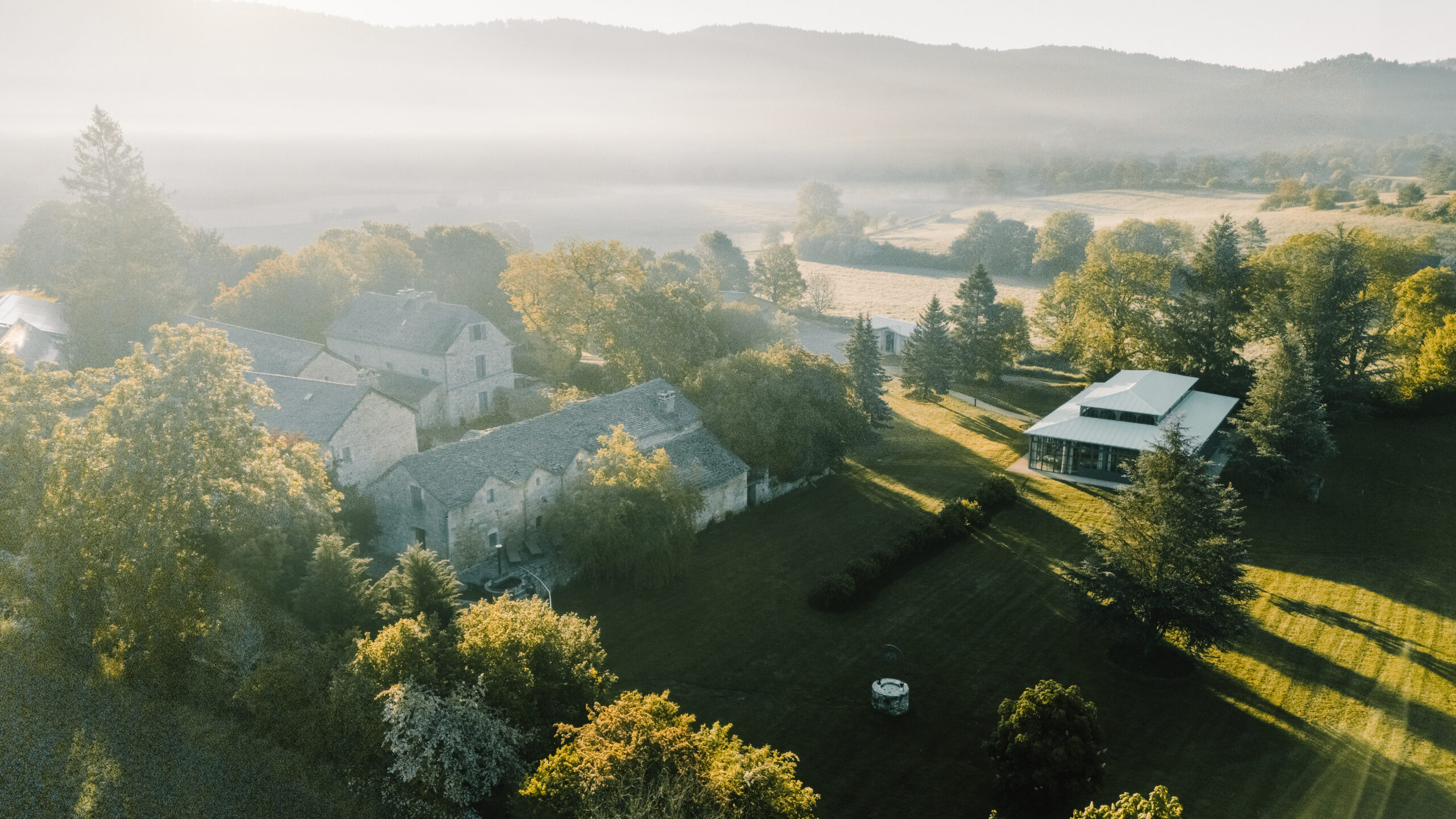
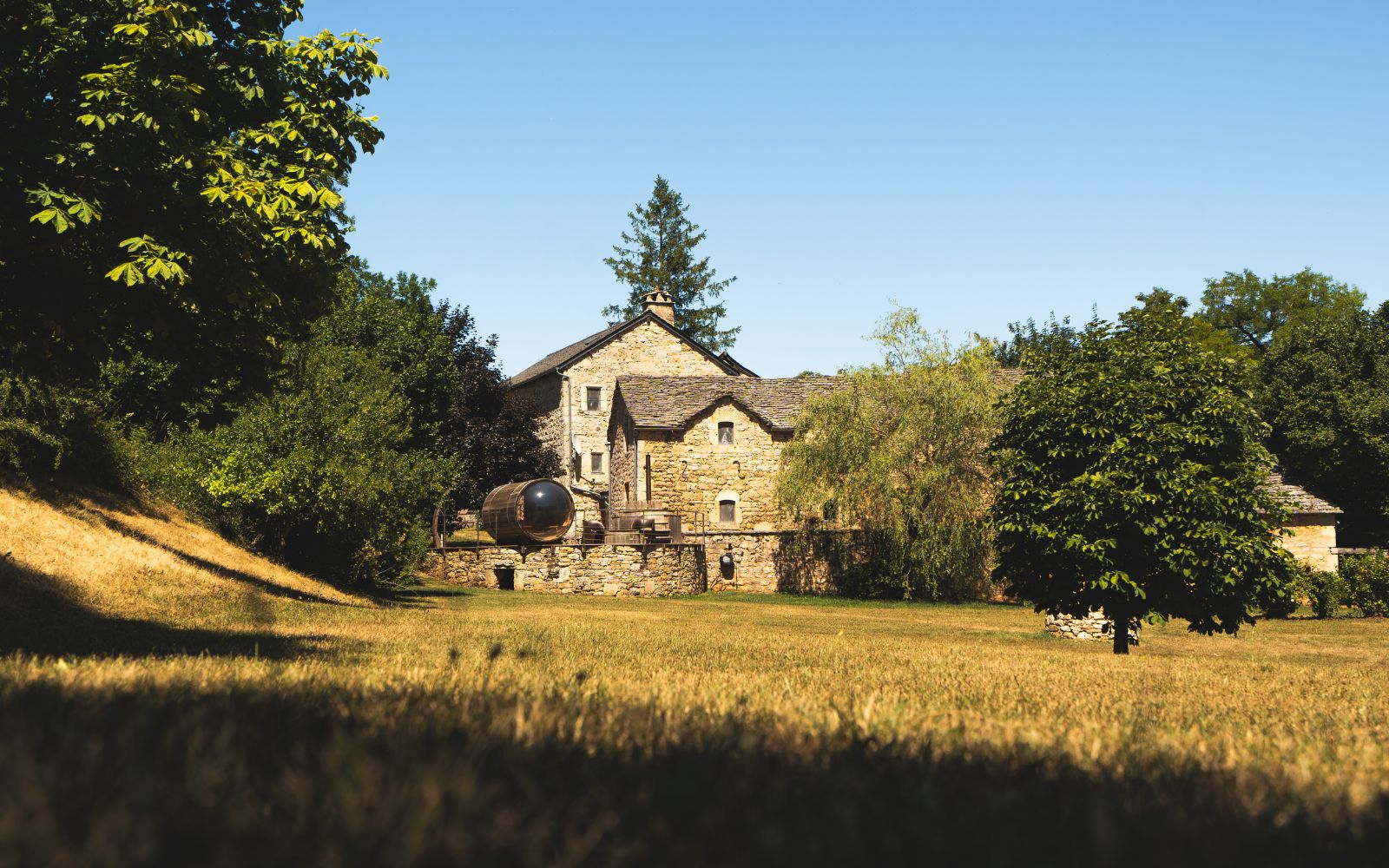
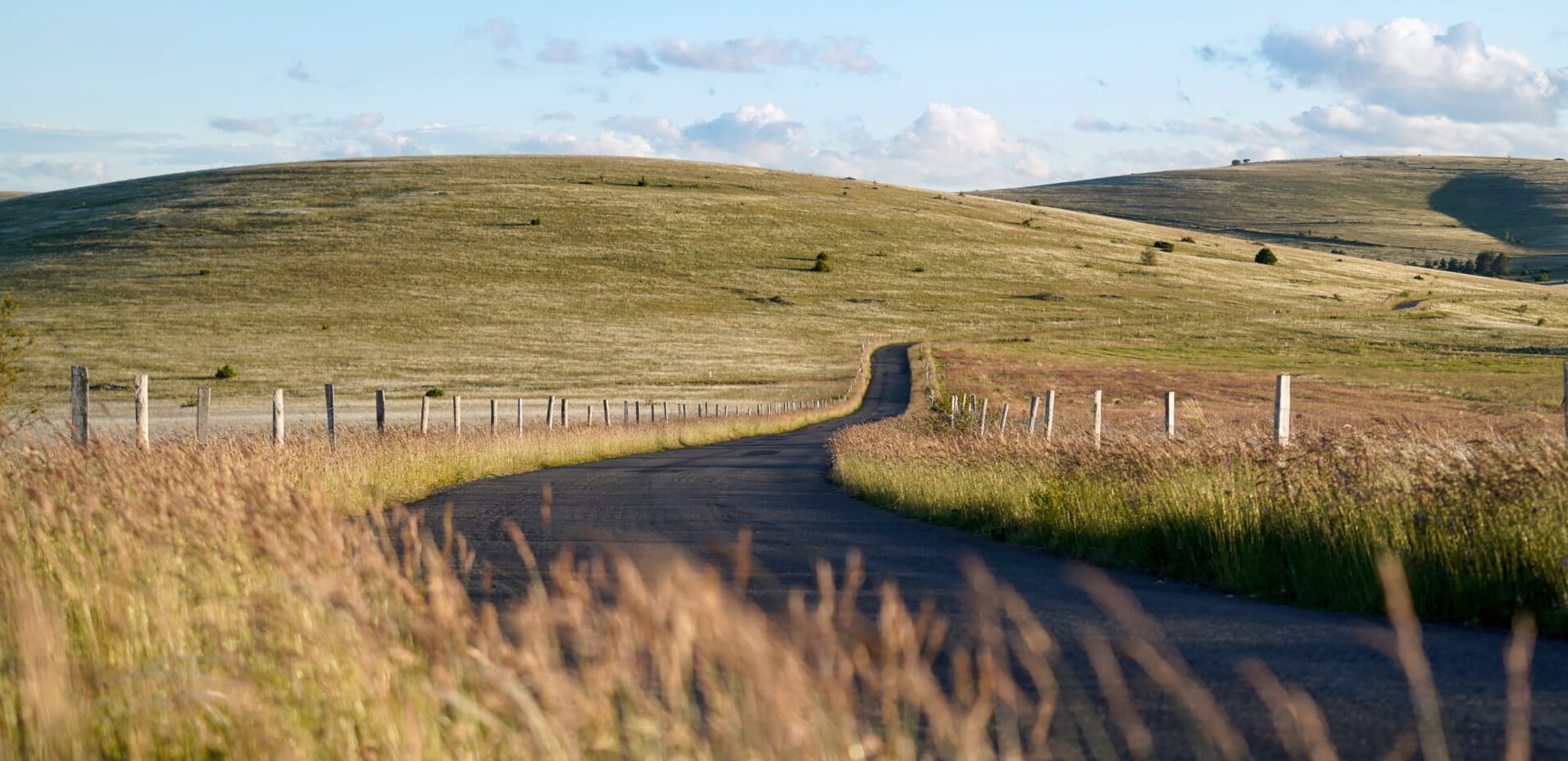
On the Causse de Sauveterre, that vast limestone plateau where the wind sweeps across dry grasslands and low stone walls , La Vialette has stood watch for almost seven centuries. Its name says it all: a contraction of via and villa, "the little house by the road."
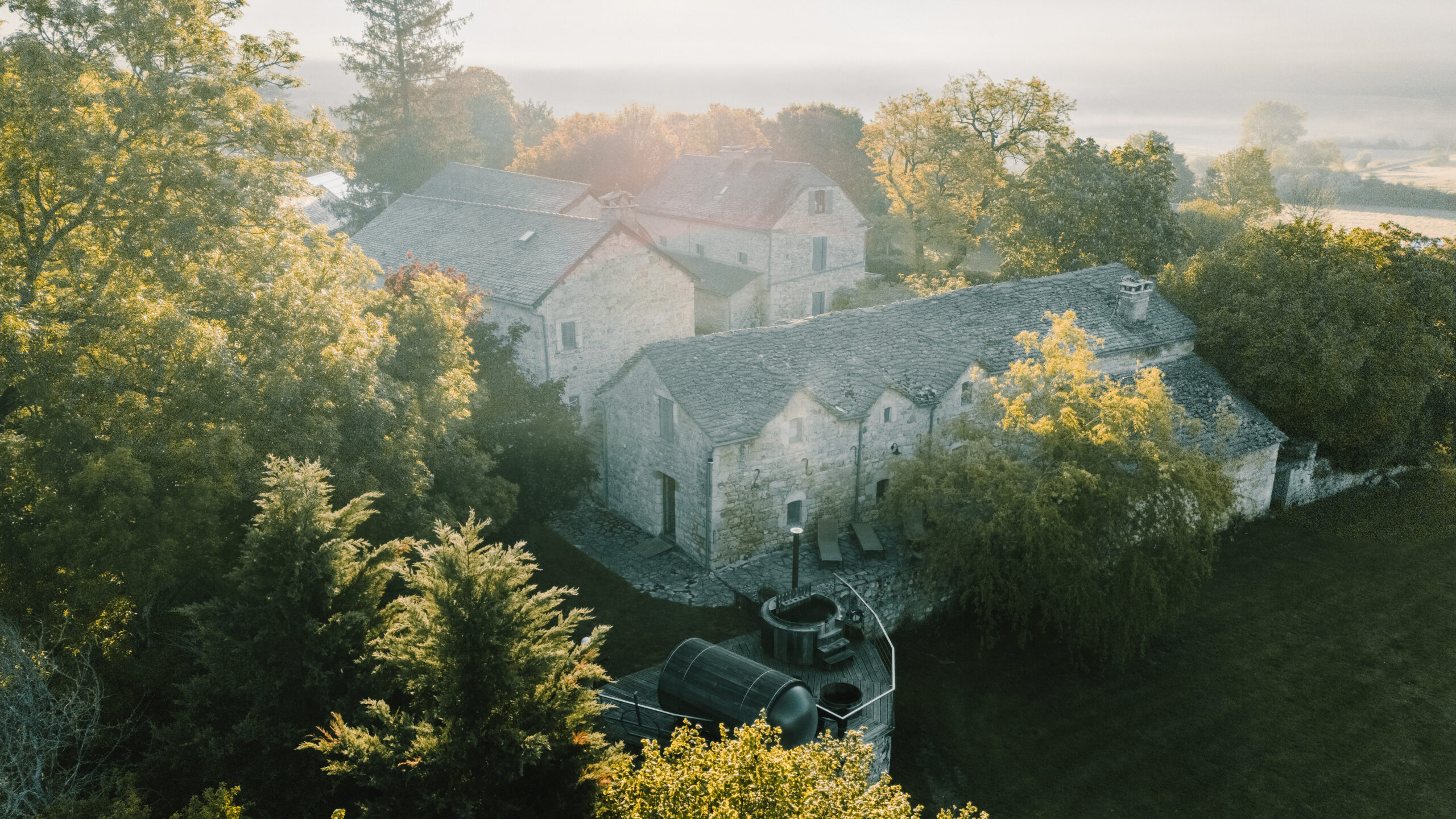
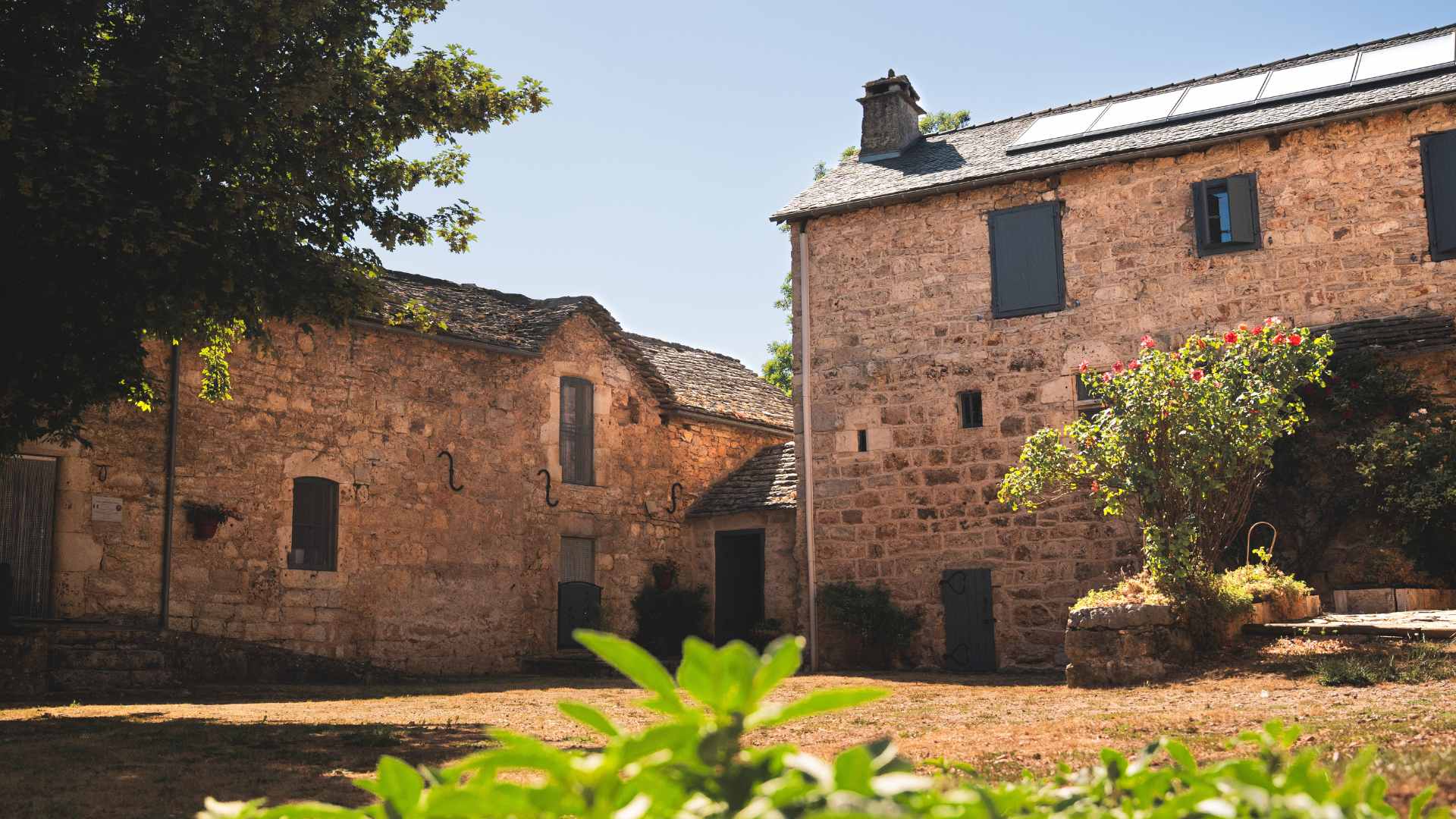
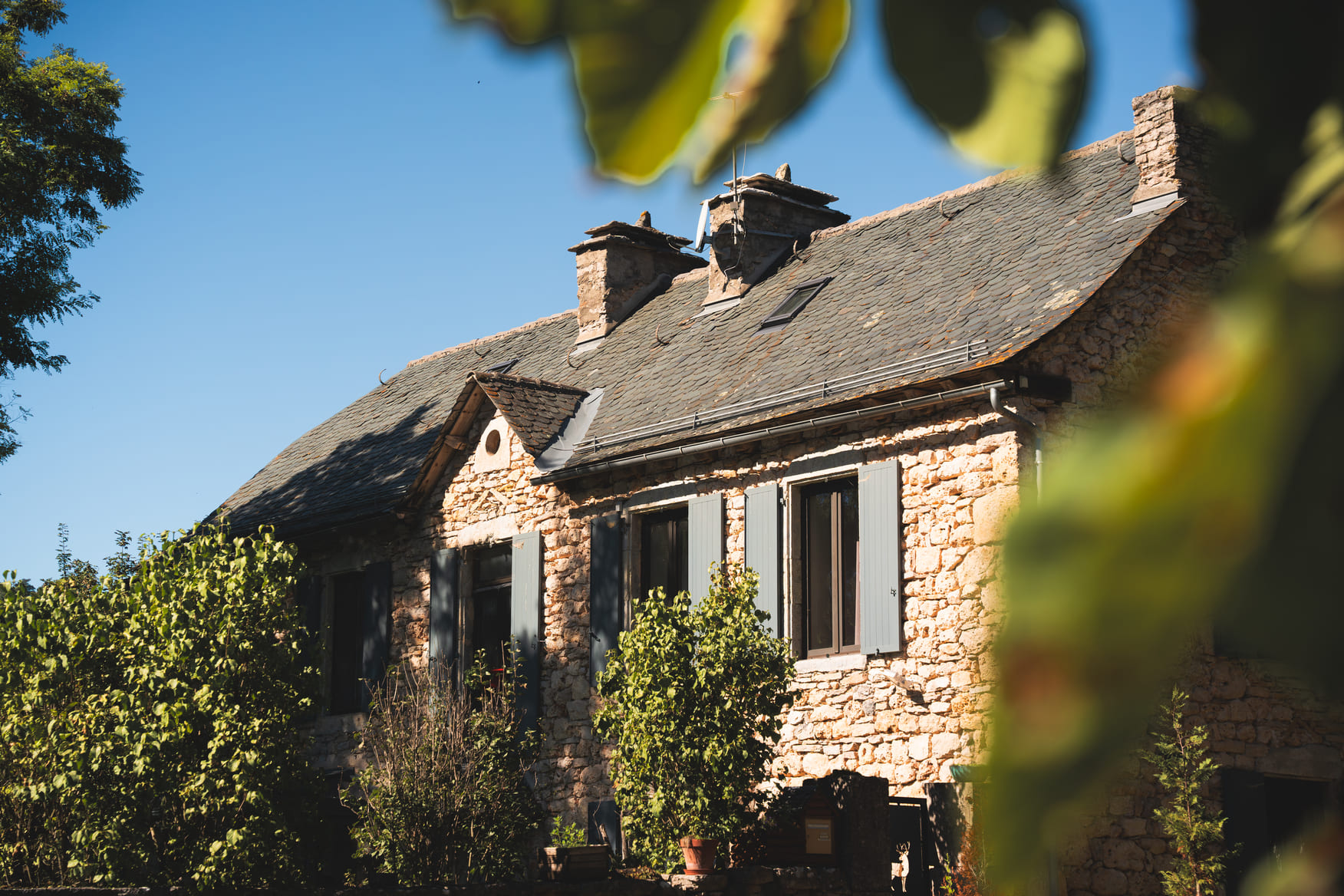
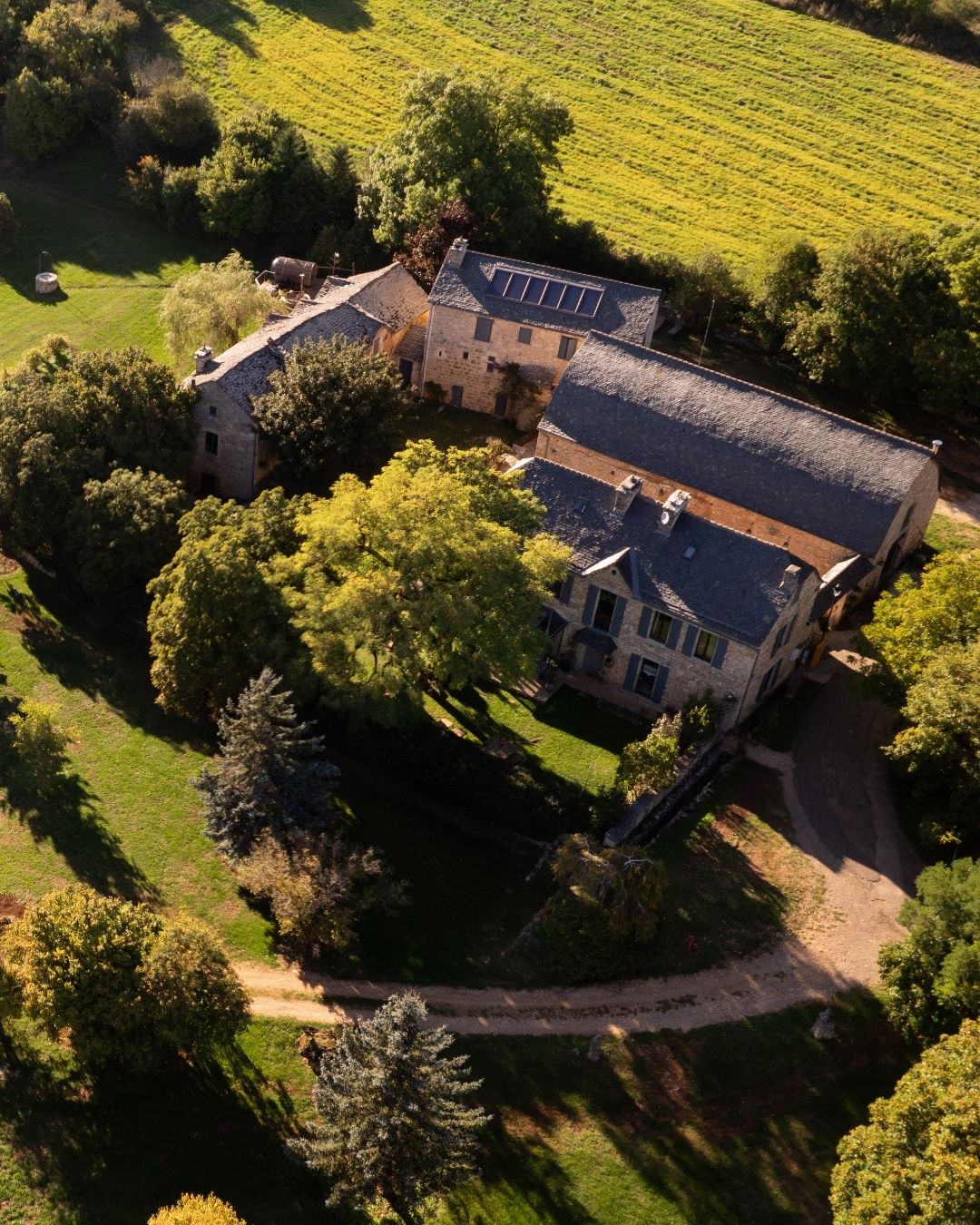
Built as early as the 14th century, it was originally a fortified Causse farmhouse, enclosed and reached through a single gate to guard against the brigands who once roamed these lands of the Gévaudan, the old name for the Lozère. Roofed with lauzes, those heavy stone slabs stacked into a roof, and raised in dry stone without a trace of mortar, it embodies the architecture typical of these high plateaus, built to withstand harsh winters and scorching summers alike.
Here, life followed the rhythm of the land and the herds. Sheep were raised whose milk went down to be aged in the famous Roquefort caves, and people practised the Causse agropastoralism that shaped this whole landscape, the very one that today earns the Causses and Cévennes their inscription on the UNESCO World Heritage list. A land at once harsh and generous, patiently shaped by those who lived on it. It was on these foundations, and in this spirit, that everything would be built.
Seven centuries later, the past can still be touched.As you wander the estate, you come across the original stone gateway, the well of the caussenard house, walls raised from their period stones, and the timber frame of the old barn, shaped like an upturned ship's hull, a carpenter's craft that has become rare. Later, in the 18th century, a bread oven was added, still in working order: we light it again on request, for an epicurean moment around bread and pastries from the village. For here, bread has never stopped being what it truly is, a symbol of sharing.
The Causse farmhouse
The Fages family story begins in 1967, when Franck's grandparents settle at La Vialette.
The renovation begins
It is from 1987 that the restoration of La Vialette begins, starting with the hunting lodge.
The Domaine de La Vialette
From 2014, Franck Fages and his wife Sandra breathe new life into La Vialette.
1910 · The birth of Henri Cordesse at the estate
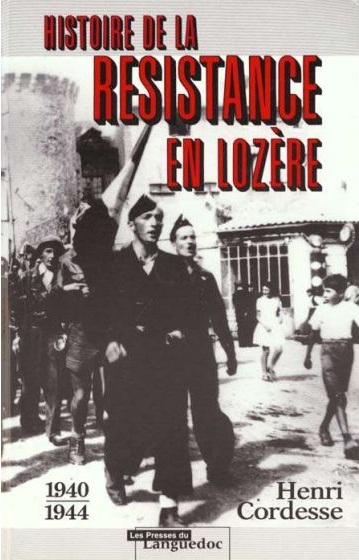
On 31 January 1910 , La Vialette saw the birth of one of the great names in the history of the Lozère : Henri Cordesse. A schoolteacher by trade and a trade unionist, he turned to the underground early on and became, under the alias "Robert," the political leader of the Resistance in the Lozère.
At the Liberation, in 1944, he was appointed prefect of the department, the man who reorganised food supply, education and the rebuilding of a battered Lozère. To him we owe l'Histoire de la Résistance en Lozère, a work that became the reference on those dark years.
For the Lozère was, during the war, a true land of refuge : a discreet department that hid, in its farms and hamlets, members of the Resistance, Jews and hunted anti-fascists, even a group of anti-Nazi German and Austrian maquisards close by, on the Aubrac.
That such a man should have been born here is no accident : it is the mark of a place where people know how to stand firm. In 2019, a commemorative plaque was placed on the Bergerie building, his birthplace; and in 1993, Henri Cordesse returned one last time to walk the land of his childhood, signing his book for Franck.
From 1967
The Fages family story begins
Franck's grandparents settle at La Vialette as fermiers, that is, tenants of the land they work, following a custom still common at the time on the Causses. They do not own these walls, but they pour into them their labour, their days and their seasons.
Without knowing it, they sow something far more lasting than a harvest: an attachment to this place that will span three generations. The whole adventure of La Vialette as we know it today takes root in that modest gesture..
©Jean-Sébastien Caron
1974 · Running water finally arrives
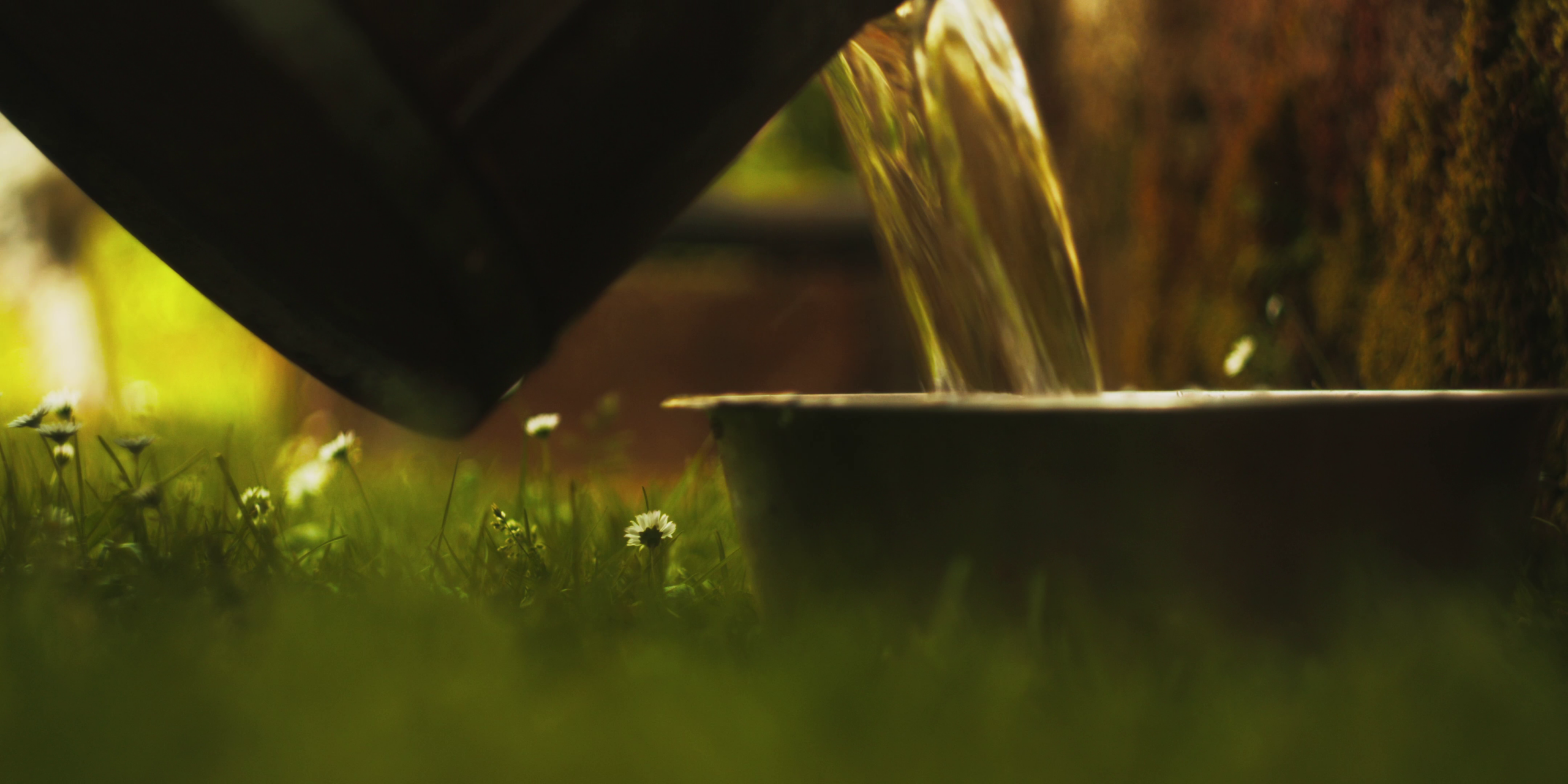
We often forget, so natural does tap water seem to us: on the Causse, it was long a luxury. The limestone drinks the rain, the springs hide, and at La Vialette, running water only arrives in 1974. Franck is then four years old.
Before that, the whole family drew from a cistern dug behind the house, then heated the water on the wood stove to wash, summer and winter, all year round.
That same year, Franck's little brother is born: two sources of life in a single year, in a house only just discovering comfort. This rare and precious relationship with water will resurface much later, in 2023, when the estate finally drills its own borehole.
©Jean-Sébastien Caron
1985 · The farmhouse inn
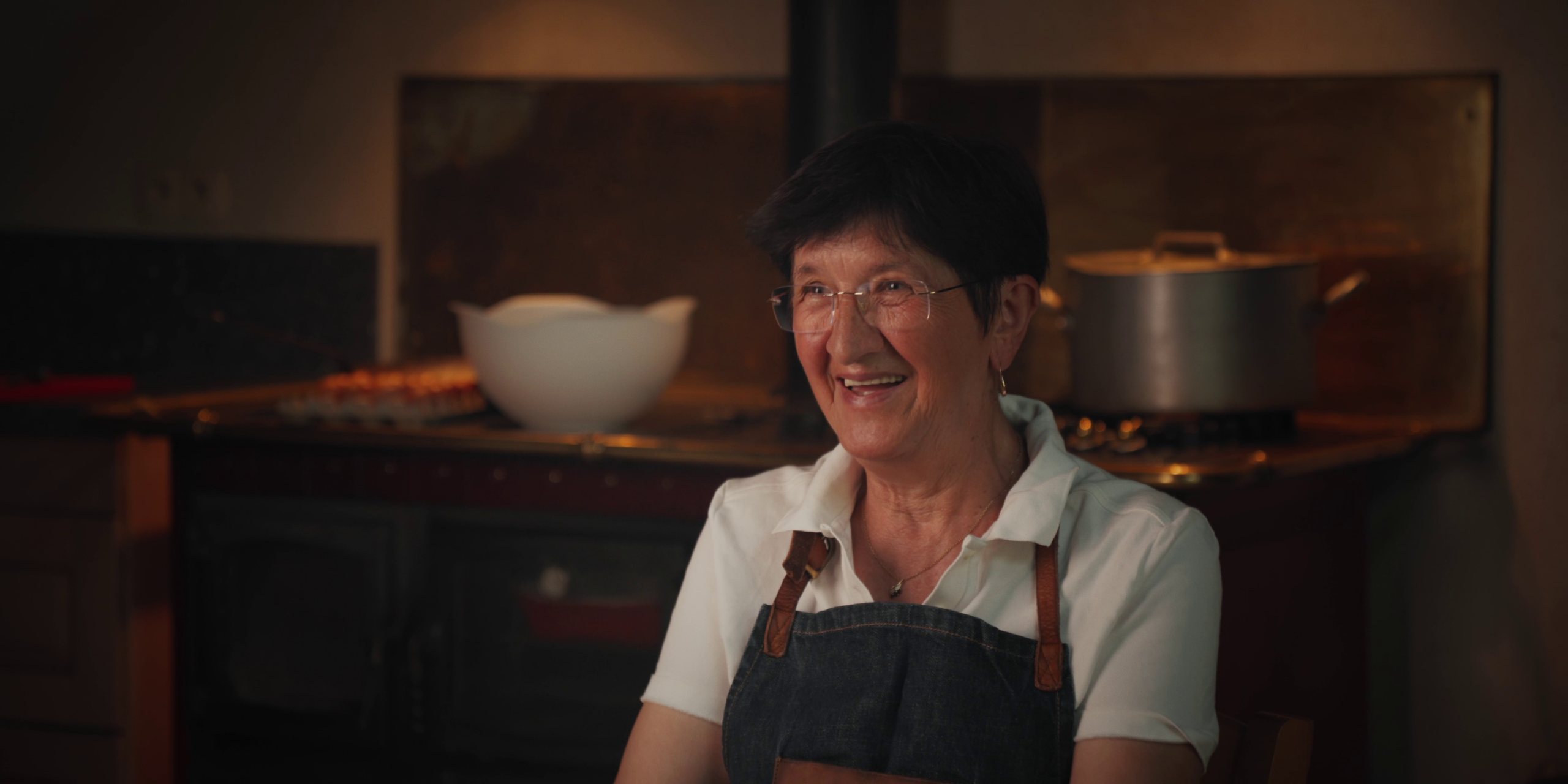
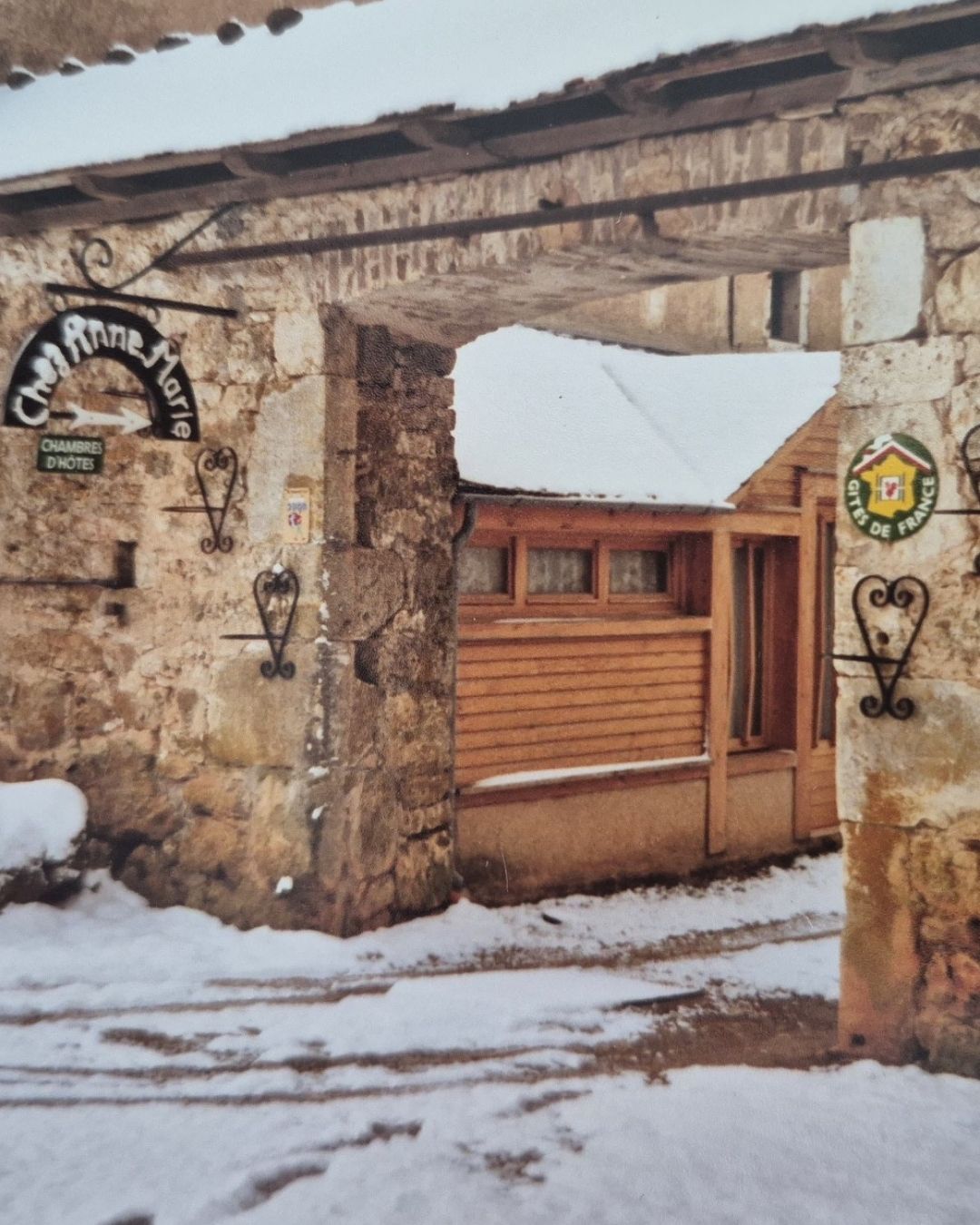
It is Anne-Marie Fages, Franck's mother, who opens the way to hospitality. From 1985 to 1993, she runs a ferme-auberge (farmhouse inn) at La Vialette: people come to lunch and dine at the farm table, around generous cooking made from what the land and the farmyard provide.
This fine French tradition, welcoming people into your home, feeding them with your own produce, taking time over a shared meal, is part of the long culture of the Causses, where hospitality has never been a job, but a way of being. It is here, at this table, between the dishes and the conversations, that the estate's spirit of welcome is born.
Everything that gives our guest rooms and shared tables their spirit today comes from those years.
©Jean-Sébastien Caron
1987 · The acquisition of La Vialette
After years spent working it, Franck's parents finally become owners of La Vialette in 1987.
The land is now theirs, and with it, the freedom to dream, to renovate, to bring back to life an estate worn down by time. The work begins with the hunting lodge, once the pied-à-terre of the local lord who came to hunt on these lands, the only building that long remained separate from the rest. Then the others would follow, one by one, patiently.
It is the start of a long work of restoration which, nearly forty years on, is still not finished, for at La Vialette, we do not restore to freeze things in place, but to keep on living in them.

From 1987 to 1996 · The restoration of La Vialette
It is from 1987 that the renovation of La Vialette begins, first with the hunting lodge. As its name suggests, it belonged to the lord of La Vialette, its owner long ago. When the lord came to hunt, he would stay in the hunting lodge.
Then, in 1993, the old sheepfold (bergerie) begins a new life: restored for welcoming visitors, it opens its doors to the first travellers. It is Franck's parents who take on the work. That year, a singular visitor returns one last time to La Vialette: Henri Cordesse, now elderly, who signs his book for Franck. The estate's past and its future meet, for the space of a visit.
In 1995, Anne-Marie and her husband restore the caussenard house to live in it. A year later, Franck, Anne-Marie's son, restores the main house, known as the master's house. Central heating finally enters the family home. Eleven years earlier, Franck and his brother had recorded, one winter morning, as low as –12°C in their bedroom. On these high plateaus where the cold bites, this is no small matter: it marks a new way of living at La Vialette.
From 1996 to 2007, Franck's parents run the guest rooms and gîtes while continuing to farm.
2007 · La Vialette finds new momentum with Franck, the third generation
In 2007, Franck in turn takes over the guest-room business from his parents: the third generation steps in. He renovates the barn, builds an indoor swimming pool, a rare luxury in the countryside, and already sees further than his time.
He installs a heating network fuelled by wood pellets, a local and renewable energy that heats the whole estate, long before "energy sobriety" became a fashionable phrase. Here, the ecological gesture has always come before the trend, out of country common sense as much as conviction.
In 2013, it is the turn of the former stables to be transformed: they become a fully accessible gîte, designed to welcome everyone, whatever their mobility needs.
For Franck and his family, to truly welcome is to leave no one out, a simple conviction, written into the stone as much as into the facts.
Since 2014 · Two stories come together
In 2014, Franck's life shifts once more: he meets Sandra. A thermal engineer from Le Puy-en-Velay, in the Haute-Loire, she brings a fresh eye to the estate, at once technical and loving.
Their very first shared project? A new roof for the caussenard house, fitted with solar thermal panels, enough to cut wood-pellet consumption by about a third.
Two paths, two temperaments, an engineer and an entrepreneur brought together around the same land to keep alive. It is the start of a journey together that, ten years later, will give rise to the most ambitious project of all: the Orangerie de Romy.
In 2017, La Vialette reinvents itself once again.
A third wave of renovation begins, keeping the same spirit: to welcome, but differently.
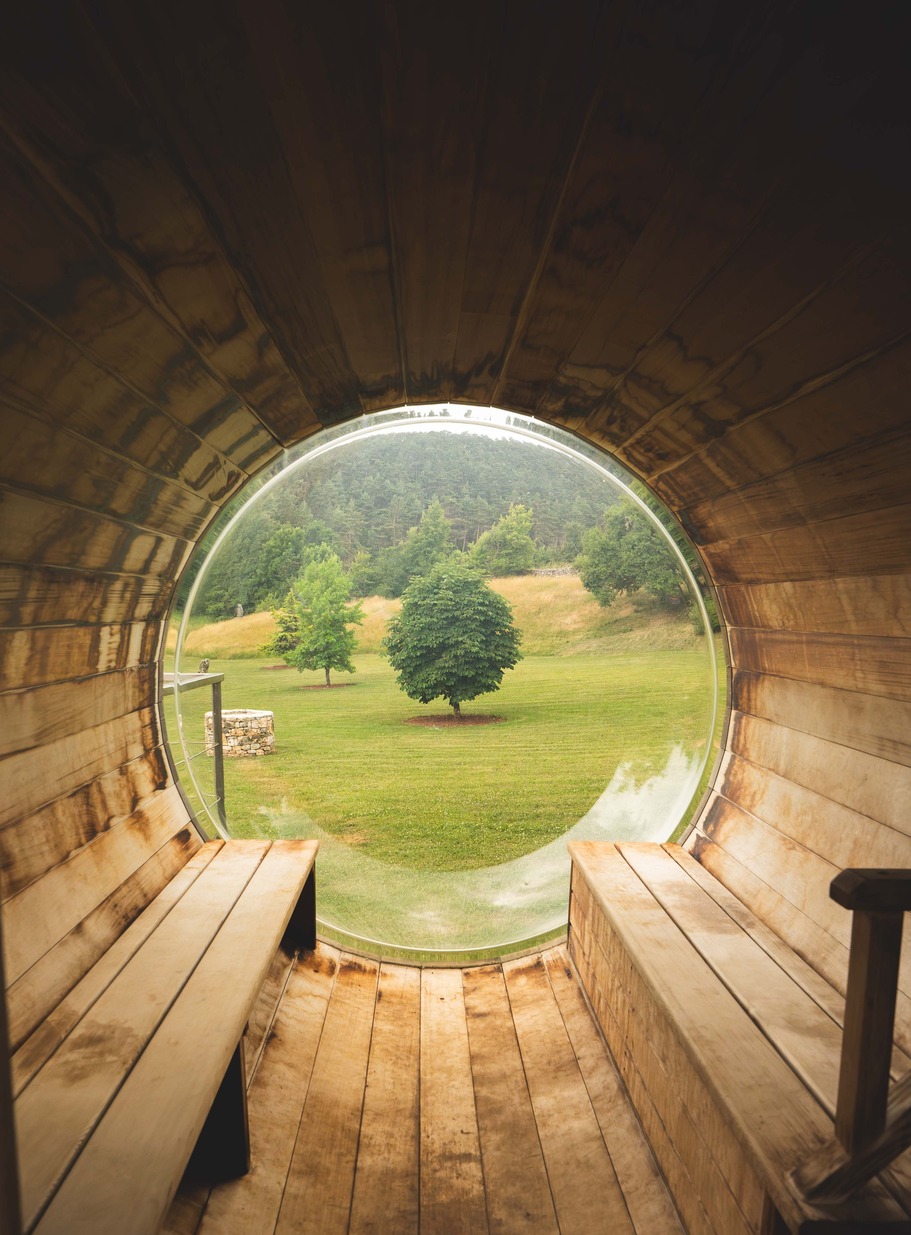
The art of slowing down
A forward-thinking spirit, Franck never stops questioning himself in order to keep La Vialette moving forward. In 2017, as swimming pools were multiplying all around, he was searching for that extra something that would make the estate more irresistible still. The answer came like a flash: at a trade fair, he discovered a wellness set, sauna, Nordic bath and cold plunge. Love at first sight. It simply made sense. And so the first stones of today's wellness area were laid.
Three years later, the same spark of intuition: walking across the terrace, Franck suddenly pictured a former storeroom transformed into a salt cave. Once again, it made sense. For here, at La Vialette, every space is shaped with intention: every stone tells a story, and every detail is born of a heartfelt impulse.
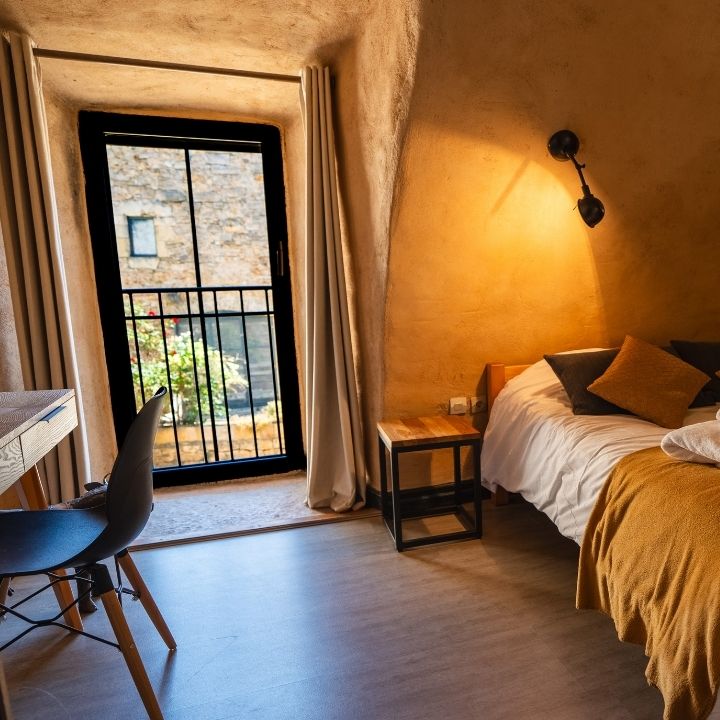
The five guest rooms
That same year, the Bergerie reinvents itself: its bathrooms swap bathtubs for walk-in showers, and its décor is rethought in a spirit both pared-back and warm. True to Causse architecture, the rooms have kept their thick stone walls and exposed beams, the very stone that keeps them naturally cool in summer and sheltered from the cold in winter, long before any air conditioning.
Each of the five rooms bears the name of an animal of the Causse, the owl, the horse, the butterfly, the cow and the ewe, as a tribute to the wildlife of these plateaus. All are dressed with photographs by Sylvain Mazerand, a friend of the house, extending the landscape onto the walls themselves. To sleep here is already to step into the setting: that of a Lozère at once raw and gentle.
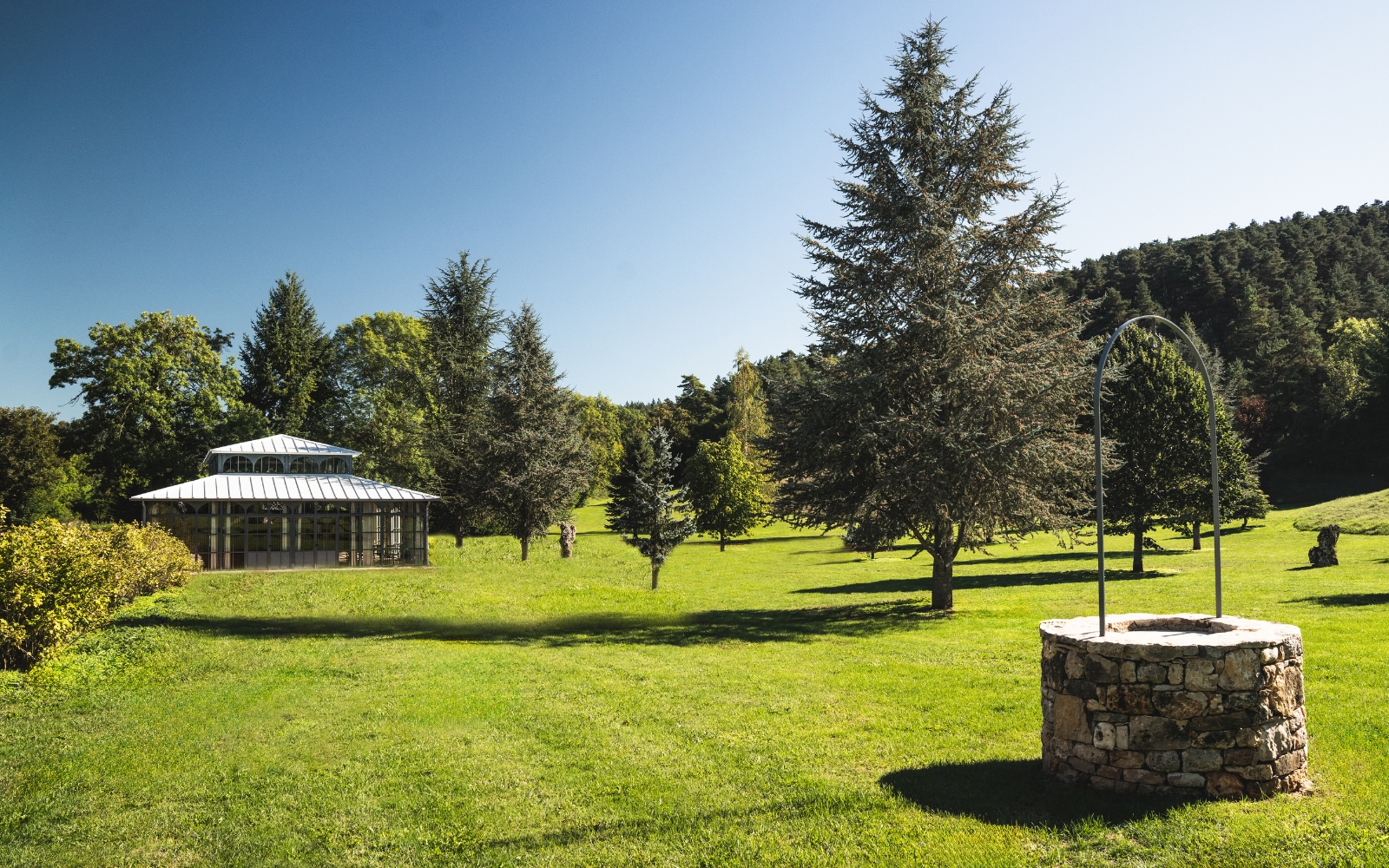
2023 · Borehole & Écogîte label
Remember 1974, and that water so sorely missed. Nearly half a century later, La Vialette digs at last: a borehole reveals its own spring, giving the estate a water autonomy it had never known.
That same year, a photovoltaic roof completes an already solid system, wood-pellet heating, solar thermal collectors, rainwater harvesting. Water, sun, wood: piece by piece, the estate moves closer to true energy autonomy, earning it the Écogîte (eco-lodge) label.
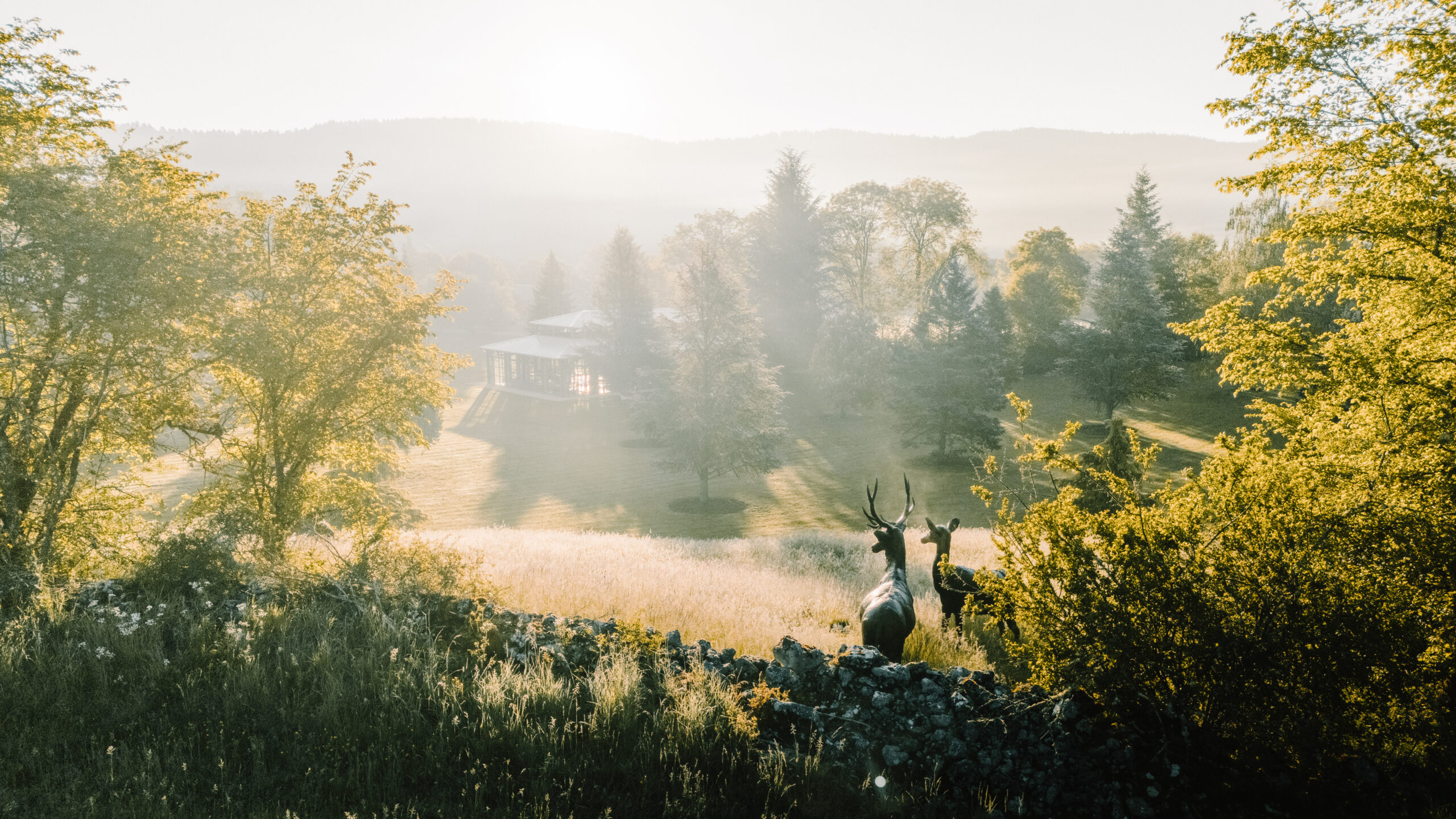
2024 · A new project is launched
After the wellness area and hospitality, Franck and Sandra dream bigger: to give La Vialette a place apart, designed for weddings and large events in the Lozère. To feed their project, they visit other orangeries around France and refine their vision, a pavilion of light opening onto the park, in the natural continuity of the gîtes and guest rooms.
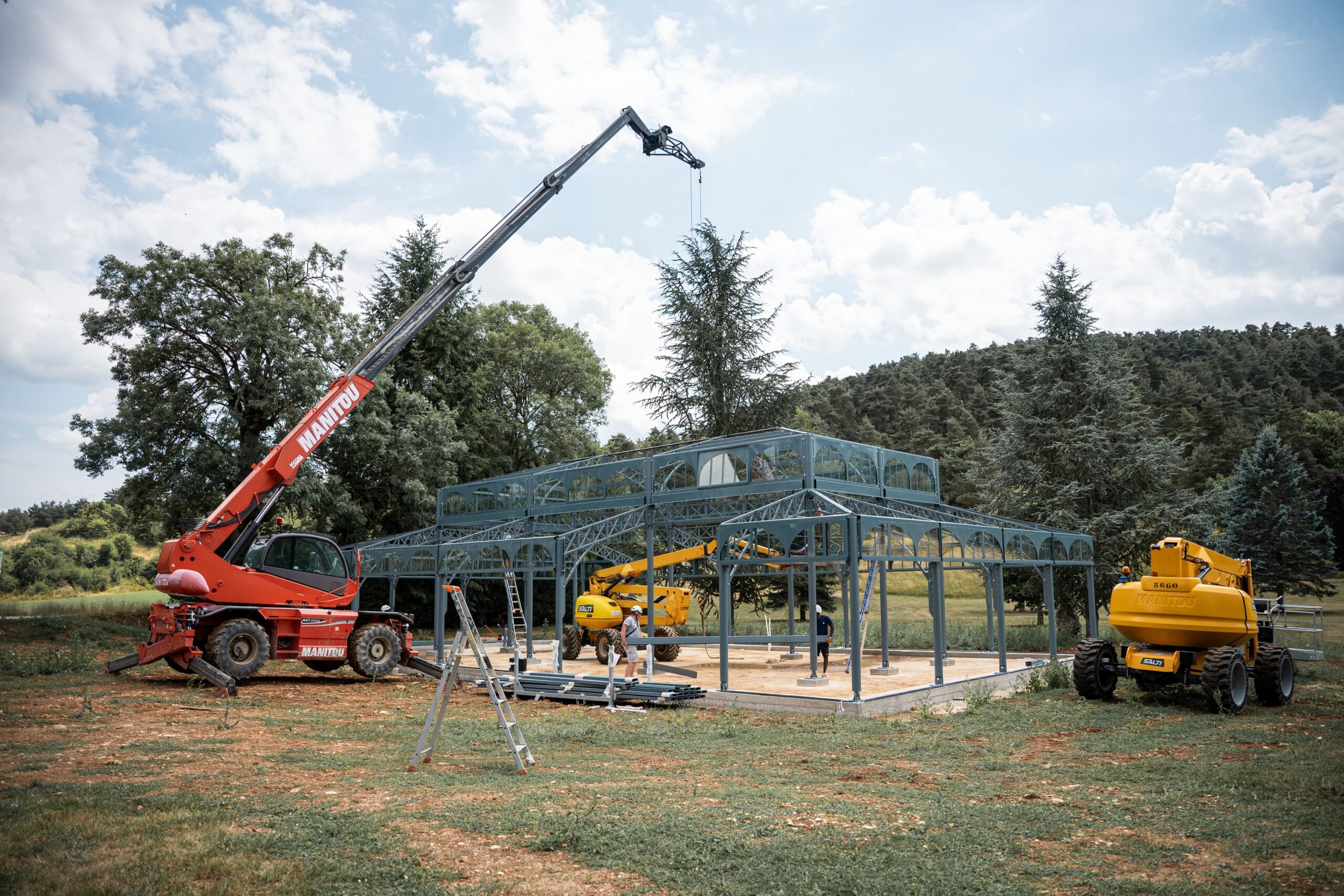
2024 · Constructions begin!
Nothing is ever quite simple on these lands. When Franck and Sandra imagine the Orangerie, they run into a major obstacle: the chosen plot is first classified as non-building land.
Then begin two years of procedures, redrawn plans and patience, the kind of ordeal that discourages most projects. But the Fages are fighters.
Through sheer tenacity, and thanks to the invaluable support of the commune, the architect and the department of the Lozère, the building permit finally comes through, at Christmas 2024. The finest of gifts, and the green light for a long-held dream.
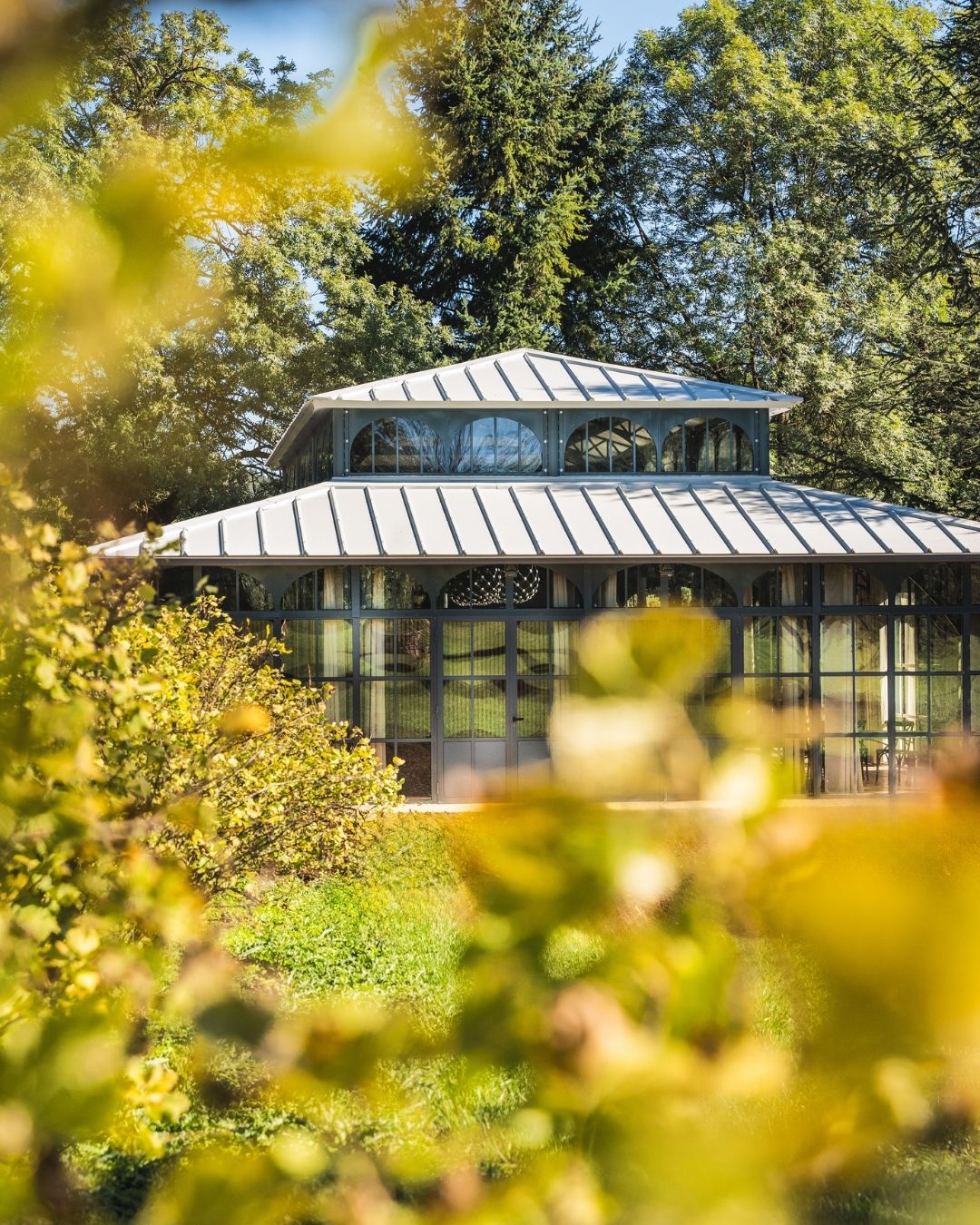
2025 · L'Orangerie de Romy shines!
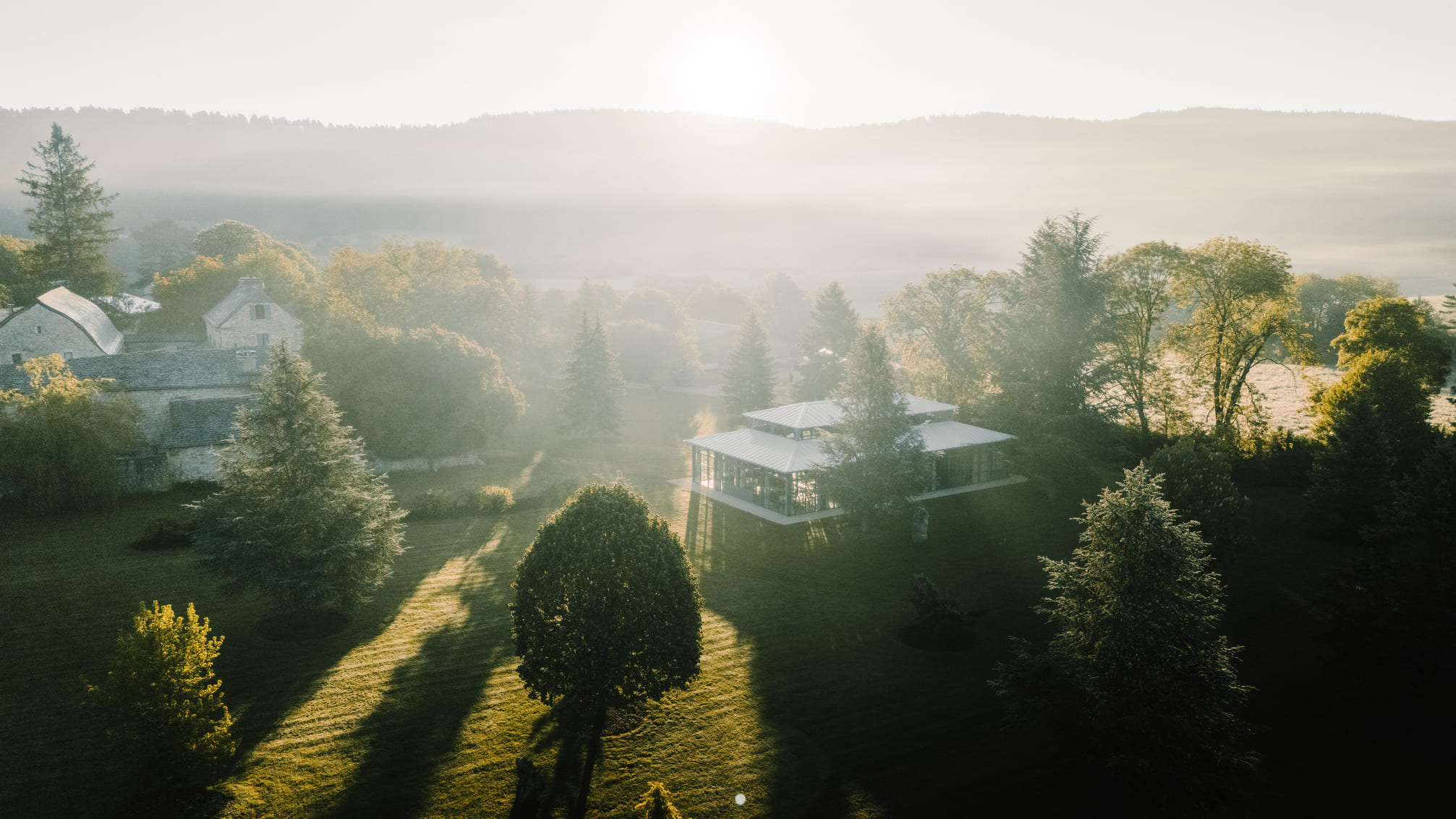
The dream finally takes shape: the Orangerie de Romy opens its doors. Conceived as a pavilion of light, it is designed to host life's most beautiful moments, first among them weddings in the Lozère. With its roughly 200 m² of fully modular space, it can bring together up to 200 guests: its wide bay windows open onto the park and bathe the room in soft light, while an adjoining catering area lets suppliers work in complete discretion. Whether for a large wedding or a more intimate reception, the space shapes itself to the measure of each celebration.
True to the estate's spirit, it was built to meet RE2020 environmental standards: insulated roof, double glazing, heat pumps paired with solar panels. A brand-new place, carried by a history of nearly seven centuries.
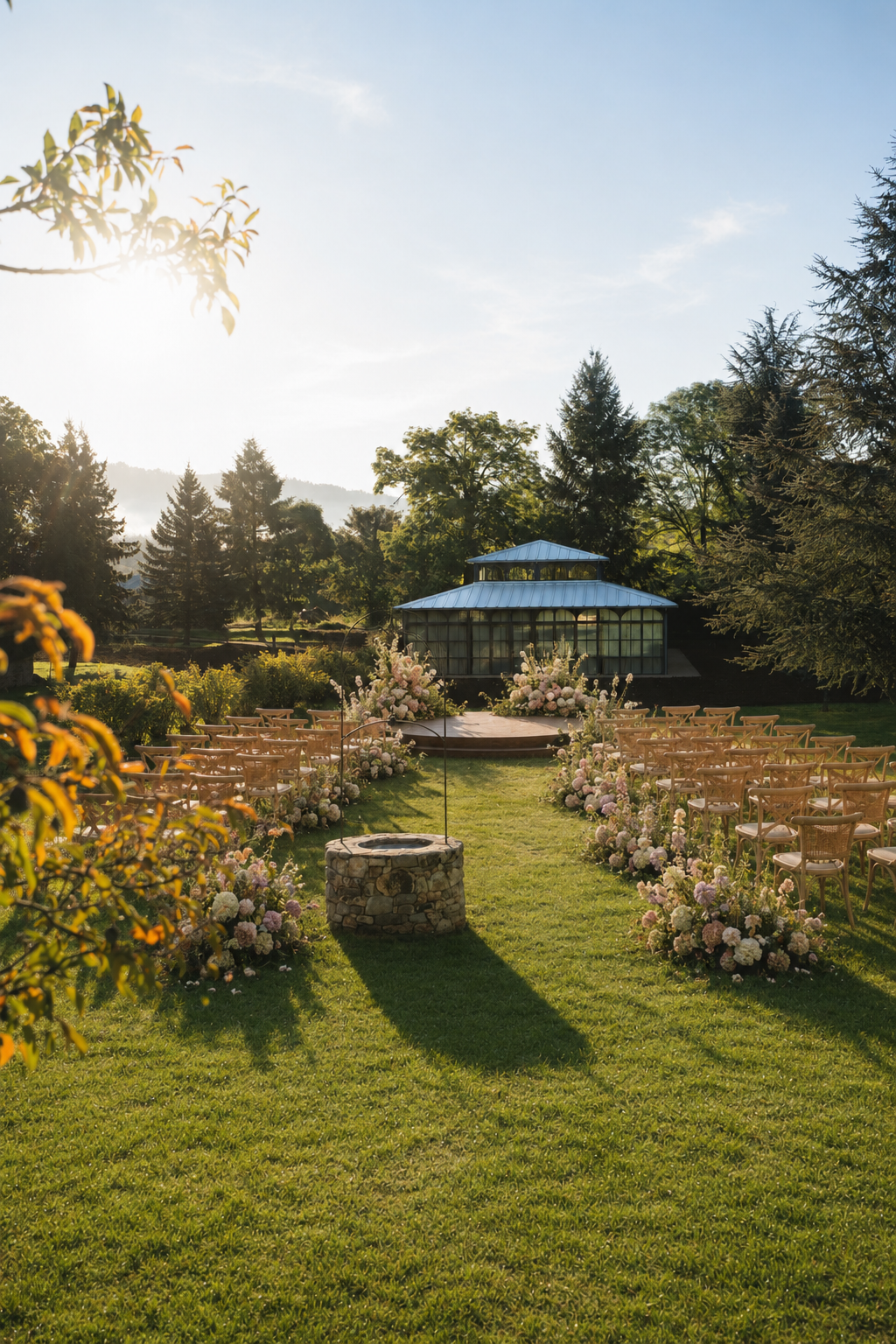
2026 · The first wedding!
2026 will remain a year apart: that of the very first wedding celebrated at La Vialette, on 20 July 2026, in the Orangerie de Romy. After centuries of history, generations of toil and months of building work, the estate welcomes at last what this new setting was imagined for, a celebration, laughter, two people joining their lives at the heart of the Causse de Sauveterre.
Everything that came before takes on its meaning: the 14th-century fortified farmhouse, Anne-Marie's table, the tenacity of Franck and Sandra become the backdrop to a simple happiness. At La Vialette, a new team, new projects and the same desire to welcome keep writing the story, season after season. What comes next? It will be written with those who push open the door of the estate.

An hidden gem venue in Occitanie for exceptional events.
At 830 metres above sea level, at the heart of the Causses and close to the Cévennes, listed as UNESCO World Heritage, the Domaine de la Vialette offers a rare setting for your events in Occitania.
A 14th-century Causse farmhouse, 3 hectares of preserved natural parkland, the Orangerie de Romy opening onto the landscape and, all around, that particular silence of the Lozère that changes the way you see things.
Weddings, corporate seminars, private celebrations, wellness retreats, whatever your occasion, the estate lends itself with natural generosity. Here, we offer you more than an event, we offer you an experience out of time.